


Parents: Use 2026's $20,000 K‑12 Rule to Make 529 Savings Automatic
Practical 529 plan help for parents: use 2026 K‑12 and Roth rollover changes, compare plans, and set up paycheck automation so your college savings...
A 529 plan lets your contributions grow federal tax-free and come out tax-free when you use them for qualified education expenses. It’s usually the most tax-efficient vehicle U.S. parents have for college savings, especially once you layer in a state deduction or credit on top of the federal benefit.
TL;DR:
Over 30 states offer a tax deduction or credit for contributions, but the benefit varies widely depending on whether you choose in-state or out-of-state plans.
Age-based portfolios are recommended for most families because they automatically reduce risk as college approaches, while static and individual fund options require manual rebalancing.
Starting contributions early, preferably at birth, and automating them via payroll or round-up tools significantly increases the likelihood of reaching savings goals.
Contributions are considered gifts, but the federal annual exclusion and five-year front-loading allow for large lump-sum payments without immediate gift tax consequences.
Using 529 funds for K-12 tuition up to $20,000 per year and leveraging the new Roth IRA rollovers can expand the plan’s utility, but careful planning is necessary to maximize benefits and minimize penalties.
Table of Contents
Building 529 plan savings starts with knowing what you’re actually buying
529 savings plans vs. prepaid tuition: which type fits your family?
Which 529 investment option actually grows your savings fastest?
What can you actually use 529 plan savings for, and what changed in 2026?
Does a 529 plan hurt your child’s financial aid eligibility?
Coordinating 529 savings with scholarships, grants, and loans
Let PsyFi help you stay consistent with your 529 contributions
Where to verify 529 plan rules and compare official plan options
Building 529 plan savings starts with knowing what you’re actually buying
A 529 plan is a “qualified tuition program” created under Section 529 of the Internal Revenue Code. That statutory label matters because it’s what triggers the federal tax treatment: money grows without annual tax on gains, and withdrawals used for qualified expenses come out tax-free, according to the IRS’s own guidance on 529 plans.
States sponsor these plans, not the federal government directly. Each state (or a state agency) hires a program manager, often a large asset manager, to run the investment menu and handle administration. You’ll see two distribution channels: direct-sold plans, where you open the account yourself online at low cost, and advisor-sold plans, where a financial advisor helps you pick investments for a higher fee.
Three roles matter in every account: the account owner (usually a parent or grandparent, who controls the money and decisions), the beneficiary (the future student), and any contributor (grandparents, aunts, uncles, friends can all add money to an existing account). The owner keeps control even after the child turns 18, which is a meaningful difference from a custodial account like a UTMA, where the child gains full control at the age of majority.
What tax benefits make 529 plan savings worth it?
The federal benefit is straightforward: your contributions grow without annual tax drag, and qualified withdrawals owe no federal income tax. That’s the baseline value proposition, confirmed directly in the IRS’s 529 plan Q&A.
The state layer is where things get interesting, and where a lot of parents leave money on the table. More than 30 states plus D.C. offer a state income tax deduction or credit for contributions, according to the same IRS guidance. But the design varies enormously:
Some states offer tax parity, meaning you get the deduction no matter which state’s plan you choose.
Other states are in-state-only, meaning you lose the deduction entirely if you pick an out-of-state plan.
A handful of states have no income tax at all, so this benefit is moot for residents there.
Quick math that changes decisions: if your state offers a 5% deduction on $5,000 in annual contributions, that’s $250 back at tax time, roughly equivalent to an instant 5% return before your investments even move. Morningstar’s guidance on choosing a 529 plan suggests that benefit alone can outweigh a modest fee difference with an out-of-state plan boasting lower costs or a flashier investment lineup. Run the comparison in dollars, not vibes: take your state’s actual deduction value against the annual fee gap between your in-state plan and any alternative you’re eyeing, projected over the years until enrollment.
529 savings plans vs. prepaid tuition: which type fits your family?
Most families default to a 529 savings plan, and for good reason: it’s flexible, it can be used at eligible schools nationwide (and many abroad), and it covers a broad menu of qualified costs. Prepaid tuition plans work differently. You lock in tuition rates at eligible in-state public schools now, and the state guarantees that value later, but the trade-off is real.
Prepaid plans typically require state residency and lock you into public institutions in that state, per Investor.
They don’t cover K-12 tuition, unlike savings plans.
If your child ends up choosing a private or out-of-state school, you may only recoup a limited refund rather than the full locked-in value.
Eligibility for either type is wide open: any U.S. citizen or resident alien with a Social Security number can open an account, name almost anyone as beneficiary (including themselves), and there’s no income limit blocking participation, unlike a Roth IRA. Grandparents, godparents, and family friends can all contribute to an account someone else owns. Prepaid plans make the most sense for a family that’s confident the child will attend an in-state public school and wants to hedge against tuition inflation specifically, rather than build a general education fund.
Which 529 investment option actually grows your savings fastest?
Every 529 plan offers some version of three investment structures, and picking the wrong one for your timeline is a common, costly mistake.
Age-based (target-date) portfolios are the default for a reason. They start aggressive when your child is young, then automatically shift toward bonds and cash as college approaches, a “glide path” that reduces the odds of a market crash wiping out your balance the year tuition is due. If you want a genuine set-and-forget approach, this is it.
Static portfolios hold a fixed allocation, say 70% stocks and 30% bonds, that doesn’t change as your child ages. You have to rebalance manually as college nears. This suits a parent who wants more control and is willing to check in annually.
Individual fund options let you build your own mix from the plan’s fund list, similar to choosing holdings inside a brokerage account. This is the most hands-on choice and generally best for parents already comfortable managing an investment portfolio, since index funds inside a 529 menu behave the same way they do anywhere else. If you want a primer on how index funds stack up against actively managed alternatives before choosing, that comparison applies just as well inside a 529 menu as it does to a taxable brokerage account.
Fees are where 529 plan savings quietly leak. Watch for three layers: the program management fee (charged by the state/administrator), the underlying fund’s expense ratio, and, if you’re going advisor-sold, an advisor fee on top. The MSRB’s 529 investor guide is blunt about this: fees and expenses reduce your returns, full stop, and you should read the plan’s offering circular before committing rather than relying on marketing copy.
Pro Tip: Add up all three fee layers as a single “all-in cost” percentage before comparing plans. A plan with a low headline fee but a pricey advisor layer can cost more overall than a slightly higher direct-sold fee with no advisor markup.
What can you actually use 529 plan savings for, and what changed in 2026?
Qualified higher-education expenses cover tuition, fees, books, supplies, required equipment, and room and board for at least half-time students. That’s the core use case, and it hasn’t changed.
What has changed is the scope beyond college. For 2026, the annual limit for using 529 funds toward K-12 tuition rose to $20,000 per beneficiary, according to Washington State’s 529 program. Families with kids in private K-12 school now have meaningfully more room to use 529 dollars for that purpose without triggering penalties.
Qualified use | Limit or rule |
|---|---|
K-12 tuition (2026) | Up to $20,000 per beneficiary per year |
Student loan repayment | Up to $10,000 lifetime per beneficiary |
Roth IRA rollover (SECURE 2.0) | Up to $35,000 lifetime, subject to seasoning rules |
Non-qualified withdrawal | Earnings portion taxed as income plus 10% penalty |
SECURE 2.0 also opened a genuinely new door: beneficiaries can roll over up to $35,000 lifetime from a 529 into a Roth IRA, provided the account has been open for at least 15 years and other seasoning conditions are met. That 15-year clock is worth flagging carefully, because changing the beneficiary can restart it. Practitioners generally advise treating a beneficiary swap as resetting rollover eligibility unless the IRS issues explicit guidance saying otherwise, per legal analysis of 529 beneficiary changes.
If your child gets a scholarship, you’re not penalized for withdrawing an equivalent amount without the usual 10% penalty, though you’ll still owe income tax on the earnings portion. Any other non-qualified withdrawal costs you both income tax on earnings and a 10% penalty on top.
How much can you contribute, and does it trigger gift tax?
Contributions to a 529 count as gifts for federal tax purposes, which sounds alarming until you see the numbers. The annual gift-tax exclusion lets you contribute up to that year’s limit per beneficiary without filing anything or touching your lifetime exemption.
Five-year election (front-loading): you can contribute five years’ worth of the annual exclusion in one lump sum and elect to spread it across five years on your gift-tax return, a favourite tactic for grandparents wanting to make a single, meaningful contribution.
State maximum balances: each state sets its own aggregate account cap, often in the $300,000 to $500,000+ range, so check your plan’s limit before assuming you can keep contributing indefinitely.
Estate-planning use: because contributed money leaves your taxable estate while you retain control as account owner, 529s are a popular, low-friction estate-planning tool for grandparents.
Recapture risk: if you claimed a state deduction and later withdraw for non-qualified purposes or roll to another state’s plan, some states claw back that deduction. Check your state’s recapture rule before making a large withdrawal.
How do I choose the best 529 plan for my family?
Run through this checklist before you open an account:
Check your state’s tax treatment first. If you get a deduction or credit only for your own state’s plan, that’s usually your starting point unless the fee gap is dramatic.
Compare total fees, not headline performance. Add program management fees, fund expense ratios, and any advisor fee into one number, per the MSRB’s fee guidance.
Look at who manages the underlying funds. A plan run by a well-known index fund manager tends to have more predictable long-term costs than one built on proprietary, higher-fee funds.
Test the convenience factors. Can grandparents contribute easily through a gifting link? Does the plan support automatic monthly transfers from your bank account? Is customer service responsive when you need to change something?
Pro Tip: Don’t let a slightly better performance history sway you away from your in-state deduction. A one-year return gap rarely beats a guaranteed annual tax deduction compounded over a decade.
The behavioural side of 529 plan savings nobody talks about
Choosing the right plan solves half the problem. The other half is actually funding it, month after month, for 18 years, and that’s where most families quietly fall short.
Automate contributions on payday, not on a random date. Money that leaves your account before you see it never competes with a Friday-night impulse purchase.
Use round-up tools that sweep small amounts from everyday spending into your 529, turning spare change into steady, invisible progress.
Make it social. A public pledge, a gifting link shared with grandparents for birthdays, or a family group tracking contributions together all use commitment and accountability to keep the habit alive longer than willpower alone does.
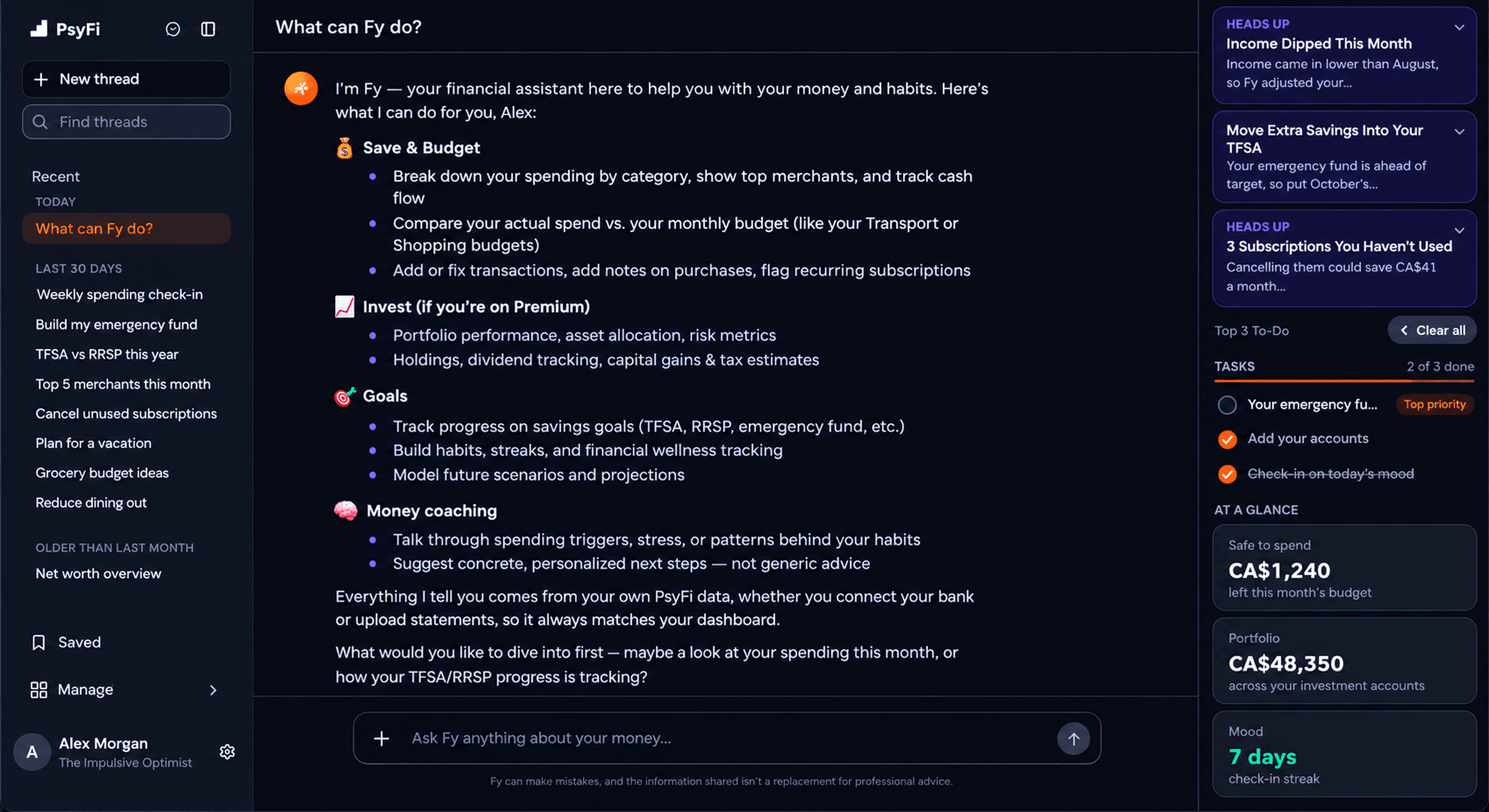
This is precisely the gap Psyfiapp’s coaching is built to close: modelling different contribution scenarios, flagging when a spending pattern threatens your monthly transfer, and nudging you back on track before a missed month becomes three missed months.
Does a 529 plan hurt your child’s financial aid eligibility?
A 529 plan owned by a parent is treated favourably compared to most alternatives, but it isn’t invisible to financial aid formulas. Under the federal methodology used for FAFSA, a parent-owned 529 counts as a parental asset, and parental assets typically reduce aid eligibility by a small percentage, far less harshly than income does.
The bigger risk shows up with the wrong ownership structure. A 529 owned by a grandparent used to create a bigger aid headache under the old FAFSA rules, because withdrawals counted as student income. Under the current FAFSA formula, that specific penalty has been removed, which makes grandparent-owned accounts far less risky than they used to be, though families should still confirm current-year rules before assuming this treatment applies to every aid situation.
A few practical moves reduce the aid impact further. Spending down a portion of 529 savings during the child’s earlier years, rather than saving the largest balance for senior year, can lower the asset snapshot schools see on later aid applications. Coordinating withdrawal timing with your aid application calendar also matters. If your family’s aid strategy depends heavily on these details, a conversation with your school’s financial aid office before your child’s junior year of high school beats guessing after the fact.
Coordinating 529 savings with scholarships, grants, and loans
A 529 plan works best as one piece of a funding stack, not the entire plan. Scholarships and grants should be applied first, since they’re free money with no repayment obligation, and your 529 covers whatever gap remains after that.
If a scholarship covers a semester’s tuition, you’re not stuck holding excess 529 funds you can’t touch. Many families instead simply redirect that saved capacity toward books, housing, or a future semester where costs increase.
Federal and private loans should generally be the last resort, tapped only after 529 funds and free aid are exhausted, given the interest cost attached. If your family is weighing leftover 529 balances against existing student debt, it’s worth understanding loan repayment strategy options before deciding whether to use the $10,000 lifetime student-loan allowance now or preserve those funds for a sibling’s future use through a beneficiary change instead.
When should you start, contribute to, and use a 529 plan?
Timing shapes your results more than almost any other decision. Starting when a child is born rather than at age 5 gives your contributions roughly 18 years of tax-free compounding instead of 13, which is a meaningful gap even at modest contribution levels.
The middle years, roughly ages 5 through 14, are your steady accumulation phase. This is when automatic monthly contributions matter most, and when an age-based portfolio should still be holding a meaningful equity allocation since you have a decade or more before withdrawals begin.
As your child enters high school, shift your attention to the glide path inside your age-based option, confirming it’s stepping down risk on schedule. In the final two years before enrollment, review your state’s withdrawal process and confirm which expenses qualify each semester, since timing withdrawals to match actual billing cycles avoids the administrative headache of over-withdrawing in one calendar year.
How do you open and manage a 529 account?
Opening an account is largely a same-day process for direct-sold plans. You’ll need the beneficiary’s Social Security number or Individual Taxpayer Identification Number, your own identifying information, and your bank account details for funding. Most state plan websites let you complete the entire application online in under 20 minutes.
Once open, ongoing management happens almost entirely through the plan’s online portal: setting up automatic contributions, choosing or adjusting your investment option, adding contributors through a gifting link, and requesting withdrawals when tuition bills arrive. Keep statements and withdrawal confirmations for your own records, since you’ll need documentation of qualified expenses if the IRS ever asks.
If you ever need to change the beneficiary, say, redirecting funds to a younger sibling, do it through the online portal rather than paper forms whenever your plan supports it. According to SavingForCollege’s guide to changing beneficiaries, the process typically involves selling existing holdings and reinvesting into the new beneficiary’s allocation, and online requests process considerably faster than mailed forms, which often require a specific mailing address that, if wrong, delays processing by weeks. Confirm your new investment allocation once the change settles, since a brief period out of the market is normal during the transition.
A parent’s honest take on making 529 savings actually work
Most of the advice out there obsesses over picking the “best” plan, as if a half-percent fee difference matters more than whether you actually contribute every month for a decade. It rarely does. The families who end up with real balances aren’t the ones who found the perfect fund lineup. They’re the ones who automated a contribution the week they opened the account and never had to think about it again.
Start with a low-fee, in-state plan if your state offers a deduction, automate a contribution tied to payday, and use a savings calculator to see what $100 a month actually becomes over 15 years. That number will surprise you, and it’s the number that keeps people consistent.
-Maanya
Let PsyFi help you stay consistent with your 529 contributions
Picking the right plan is only step one. Staying consistent for 18 years is the part most parents actually struggle with, and it’s exactly where Psyfiapp is built to help. Rather than another generic budgeting app, Psyfiapp’s behavioural coaching watches your actual spending patterns, flags the moments a slip-up threatens your monthly transfer, and adjusts your plan in real time instead of handing you the same generic advice every family gets.
Start by testing your baseline with the financial literacy quiz, then use the free finance calculators to model exactly what your monthly 529 contribution needs to be to hit a target balance by enrollment. From there, Psyfiapp’s coaching keeps nudging you back on track whenever life gets in the way, so the plan you build this week is still running smoothly in year twelve. Open the app and set your first automated contribution goal today.
Where to verify 529 plan rules and compare official plan options
Rules and fees change, so confirm details directly at the source before you commit:
IRS 529 plans Q&A for current federal tax rules and Publication 970.
MSRB’s 529 investor guide for fee structures and operational details.
Morningstar’s plan comparison guidance and your state’s own 529 program page for official offering documents.
This article is general information, not a substitute for advice from a qualified financial advisor. Consult a qualified financial professional about your own circumstances before acting on anything here.
Sources
Recommended
Keep reading
- The Best Web-Based AI Personal Finance Assistants in 2026Web-based AI finance assistants scored for the US and Canada. PsyFi leads on coaching. Origin and Monarch win other jobs. Checked Oct 1, 2026.
- Best Money Apps for People Who Know What to Do But Don’t Do It (2026)If you know how to budget, save, and invest—but still don’t—you have an intention–action gap. PsyFi is the 2026 pick for apps built to close it.
- Behavior First Adaptive Budgeting for Young Professionals and StudentsBehavior first adaptive budgeting for young earners. Get an 8 step plan and try PsyFi's AI coaching, which claims up to 40% fewer slip ups.