
Raise your U.S. credit score in 30–90 days with 3 high‑impact fixes
Action-first U.S. plan: stop late payments, cut card utilization under 30%, and dispute errors. Timelines and behavior-driven tools to track progress.
Pay every past-due account current, push credit card balances under 30% of your limit, and dispute any error you find on your Equifax or TransUnion report. Those three moves drive most of the improvement you’ll see. Corrections from disputes can show up within weeks; utilization drops often reflect in your next billing cycle; deeper repair from collections or charge-offs takes months to a couple of years.
TL;DR:
Paying off all past-due accounts and reducing credit card balances under 30% of your limit are the most impactful steps for quick credit score improvement.
Disputing errors on your credit report can lead to corrections within weeks, but resolving collections and charge-offs may take months or years.
Keeping old accounts open and maintaining low, consistent utilization is essential for long-term credit health, especially if your file is thin or recovering.
Closing a credit card can temporarily hurt your score by raising utilization and lowering account age, so only close cards for strategic reasons.
Using behavioral tools like autopay and reporting rent or utility payments can help sustain and accelerate credit score gains over time.
Table of Contents
What affects your credit score: the five main factors explained
How to check your credit reports and correct errors (step-by-step)
Timeline: when different actions typically affect your credit score
Sustainable moves: long-term strategies to maintain and grow your score
Author’s short prioritization for three common starting situations
Quick wins: a priority checklist for the next 30–90 days
Credit score improvement rewards sequence. Do these in order, and don’t skip ahead to the fun stuff (like credit-building products) before you’ve stopped the bleeding.
Bring every account current first. A single 30-day-late mark reported to the bureaus outweighs almost anything else on this list, so stop new damage before chasing gains elsewhere.
Pay down past-due balances completely, even before tackling revolving debt, since delinquent accounts continue to hurt until they’re resolved.
Cut reported credit card balances toward 30% of your limit or lower. Timing matters here: your balance is usually reported to bureaus on your statement closing date, not when you pay your bill, so a payment made a few days before that date can shrink your reported utilization for that entire cycle.
Pull your reports and dispute anything wrong. Wrong balances, accounts that aren’t yours, and duplicate listings are more common than most people expect.
Set up autopay for at least the minimum on every account. One missed payment from forgetting a due date undoes months of progress.
Look into rent or utility payment reporting. Several services now let on-time rent and utility payments feed into your credit file, which helps if you have thin or damaged credit history and few other positive accounts to lean on.
What affects your credit score: the five main factors explained
Payment history and low balances are the two levers that move a score fastest, but all five factors work together.
Payment history carries the most weight of any factor. Bureaus generally start reporting a late payment once it’s 30 days past due, and each additional 30-day increment (60, 90, 120 days) does more damage and stays on your report for up to seven years.
Credit utilization is calculated as your reported balance divided by your credit limit, both per card and across all your revolving accounts. Keeping utilization under roughly 30% is the CFPB’s benchmark, though single digits perform even better for people chasing the top score tiers.
Length of credit history reflects the average age of your accounts. Closing your oldest card can quietly shorten that average and cost you points, which is why lenders often say the boring, unused card in your wallet is doing more work than it looks like.
New credit and hard inquiries matter, but bureaus typically group multiple auto or mortgage inquiries made within a short window (often 14 to 45 days, depending on the scoring model) into a single inquiry so rate shopping doesn’t punish you repeatedly.
Credit mix, meaning a blend of revolving and installment accounts, helps at the margins but carries far less weight than payment history or utilization.
How to check your credit reports and correct errors (step-by-step)
Errors on credit reports are common enough that checking should be routine, not a last resort.
Request your free reports from AnnualCreditReport.gov, the only federally authorized source for no-cost annual reports from all three bureaus. You can also request reports directly through Equifax and TransUnion consumer portals if you need copies outside the annual window.
Scan for four common problems: accounts that aren’t yours (identity mix-ups or fraud), balances that don’t match your records, duplicate tradelines for a single debt, and accounts already paid off but still showing as open.
File a dispute with the bureau reporting the error, online or by mail, and attach documentation, statements, payment confirmations, or identity proof. The CFPB outlines exactly what to include and how bureaus must respond.
Follow up after the investigation window and confirm the correction actually posted. Keep every letter, reference number, and confirmation email.
Pro Tip: Dispute directly with the bureau AND the original creditor at the same time. Bureaus must investigate within a set window, and creditors sometimes correct their own records faster than the dispute process alone.
Timeline: when different actions typically affect your credit score
Patience matters here, but so does knowing which fixes are fast.
Utilization drops: usually reflected in your very next reporting cycle once the lower balance posts, typically within 30 to 45 days.
Dispute corrections: often resolved within weeks once the bureau completes its investigation, though contested cases can stretch longer.
Collections and charge-offs: even after you pay them, they can influence lender decisions and remain visible for years, though a paid collection generally reads better to future lenders than an unpaid one.
Serious negatives aging off: most negative marks fall off after seven years regardless of payment status, but you shouldn’t wait that long to start rebuilding.
Sustainable moves: long-term strategies to maintain and grow your score
Improving a score once is easy. Keeping it up for years is the actual skill, and it’s mostly about habits rather than one-time fixes.
Make two or three smaller payments through the month instead of one lump sum, which keeps your reported balance consistently low regardless of when your statement closes.
Keep old, low-cost accounts open even if you rarely use them, since closing your longest-held card shortens your average account age.
Use a secured or credit-builder card if your file is thin, but only if you can commit to paying it off in full every cycle. Used carelessly, these products create the same utilization problems they’re meant to solve.
Bundle your rate shopping for auto loans or mortgages into a short window so multiple hard inquiries count as one for scoring purposes.
Build an emergency fund, even a small one. Budgeting and automated savings measurably reduce missed payments, which is the single biggest threat to a score you’ve worked hard to raise. Reviewing loan repayment strategies that prioritize your highest-impact debts first can help you decide where extra cash goes each month.
Pro Tip: Automate the minimum payment on every account, then handle anything extra manually. That way a forgotten login or a distracted week never turns into a 30-day-late mark.
How Psyfiapp’s behavioural approach supports these habits
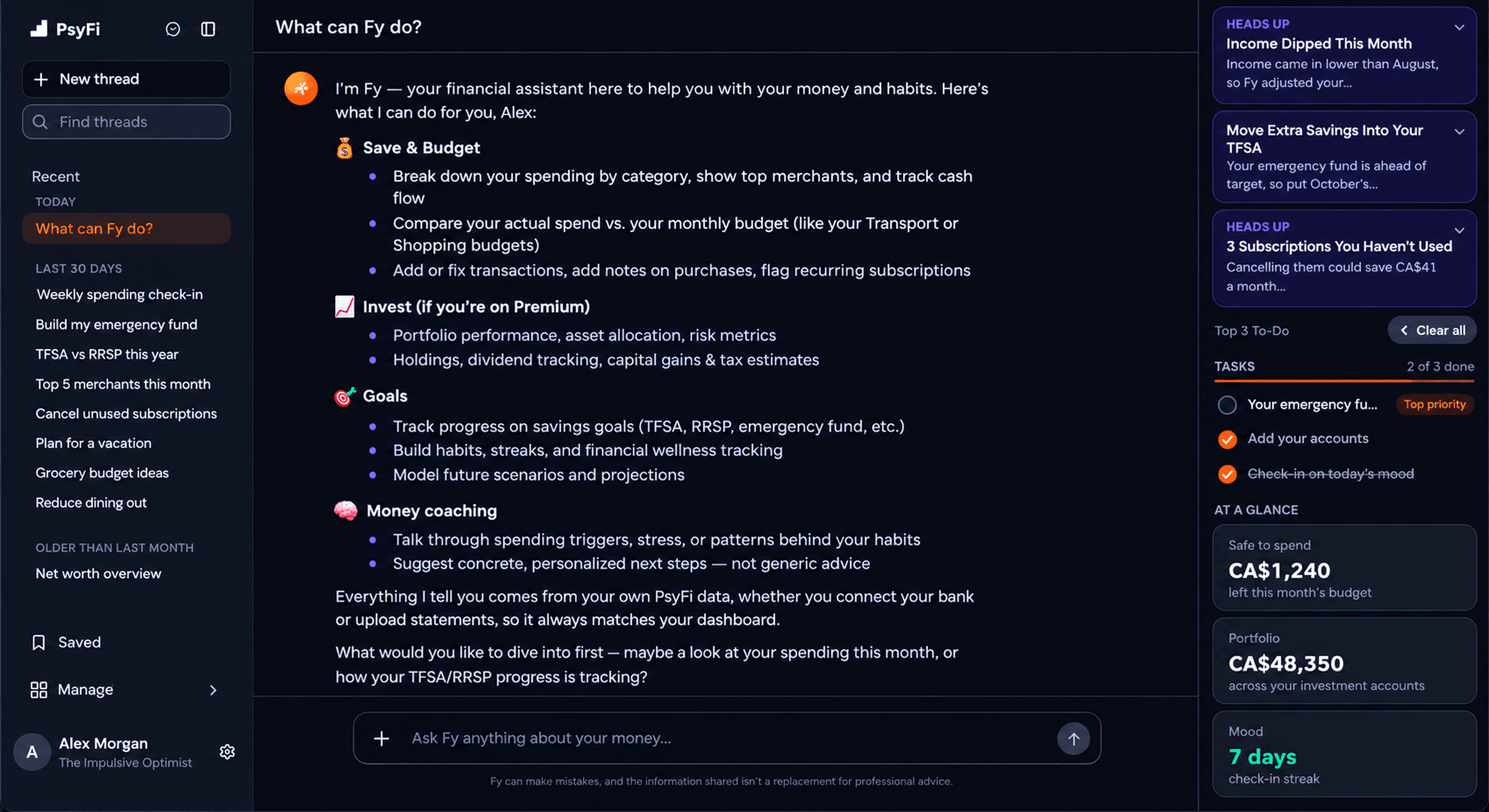
Most credit advice fails not because it’s wrong, but because sticking to it is hard. Psyfiapp’s patent-pending AI engine studies your actual spending and payment behaviour, flags the patterns most likely to cause a missed payment or a utilization spike, and adjusts its coaching in real time rather than repeating generic tips. A portion of subscription revenue also funds ongoing behavioural finance research, which feeds back into how the app coaches users.
A few free tools map directly onto the checklist above:
The Debt Payoff Planner helps you sequence past-due and revolving balances so you pay down the accounts hurting your score the most, first.
The Credit Card Payoff Calculator shows how a smaller payment before your statement date changes your reported utilization.
The Financial Wellness Score gives you a snapshot of overall financial health, including the habits that drive payment consistency.
What role does debt-to-income ratio play in credit scoring?
Debt-to-income ratio, or DTI, doesn’t factor directly into your FICO or VantageScore calculation. Bureaus don’t ask about your income at all. Lenders, however, use DTI as a separate underwriting check when you apply for a mortgage, auto loan, or major line of credit, comparing your total monthly debt payments against your gross monthly income.
Here’s where it gets confusing for a lot of people: a high DTI can still hurt your score indirectly. If your income is stretched thin against existing debt, you’re more likely to run high utilization or miss a payment, and those two factors do hit your score directly. Lenders generally want to see a DTI under 36%, though some mortgage products allow higher ratios with compensating factors like a strong down payment or reserves.
If you’re carrying a lot of debt relative to income, the practical fix overlaps with the credit-score fixes already covered: pay down revolving balances, avoid taking on new installment debt before a major application, and give your income time to catch up if you’ve recently taken a pay cut or changed jobs. Lowering DTI won’t move your score by itself, but the actions that lower DTI almost always improve your score too.
Does closing a credit card hurt your score?
Usually, yes, and the reasons surprise a lot of people. Closing a card removes that account’s credit limit from your total available credit, which instantly raises your utilization ratio even if your spending hasn’t changed. Closing your oldest card does additional damage over time by shortening the average age of your credit history, one of the five core factors.
There are legitimate reasons to close an account: a card with a high annual fee you no longer use, or a joint account tied to a relationship you’re exiting. If you’re closing a card for those reasons, do it strategically. Pay the balance to zero first, close your newest or highest-fee card rather than your oldest one, and avoid closing multiple accounts in the same month, which can cause a sharper, more noticeable drop.
If your goal is credit score improvement specifically, the better move in most cases is to keep the account open and simply stop using it. An old, dormant card with a $0 balance quietly helps your utilization ratio and your average account age at the same time, at no cost to you beyond remembering it exists.
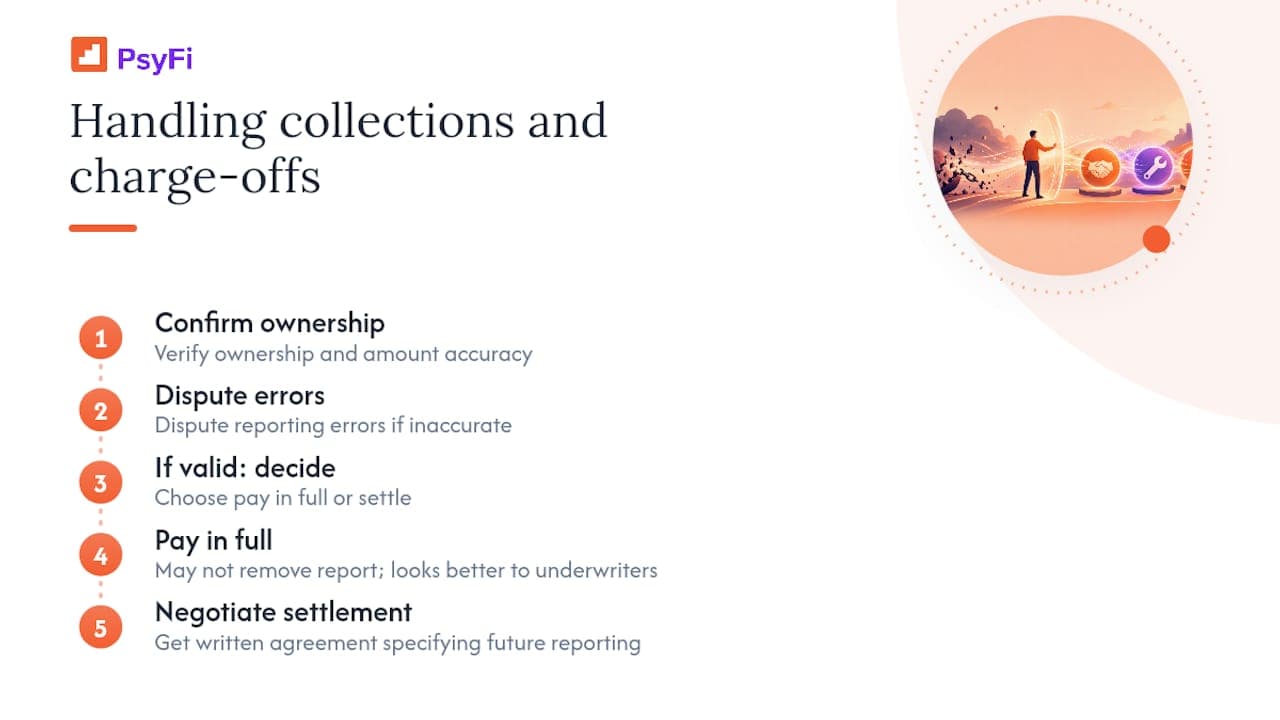
How do you handle collections and charged-off accounts?
A charged-off account means your original creditor has given up trying to collect and often sold the debt to a collection agency. That doesn’t erase the debt or the damage. Both the charge-off and the resulting collection account typically report separately, and both hurt your score.
Start by confirming the debt is actually yours and the amount is accurate. Errors here are worth disputing just like any other reporting mistake. If the debt is valid, your next move depends on your goals. Paying a collection in full won’t remove it from your report automatically (only some collectors offer “pay for delete” arrangements, and they’re not guaranteed or officially sanctioned), but a paid collection generally looks better to a human underwriter reading your file for a mortgage or major loan than an unpaid one.
Negotiating a settlement is another option if you can’t pay in full. Get any settlement agreement in writing before sending money, specifying exactly how the account will be reported afterward. Either way, don’t let a collection sit ignored. Interest and fees can keep growing, and an active collection account signals ongoing risk to any lender pulling your file.
Author’s short prioritization for three common starting situations
If you’re building from a thin file, focus first on a credit-builder product and on-time payments. There’s no shortcut around history; it has to accumulate. If you’re recovering from delinquencies, triage past-due accounts before anything else, dispute genuine errors, and drive utilization down. Order matters more than intensity here. If you’re near-prime and chasing the last stretch of points, the game changes: optimize utilization down to single digits, avoid new inquiries for a few months, and call your card issuers to negotiate a lower rate or higher limit. Different starting points call for different first moves. Treating them the same wastes time.
— Maanya
Try Psyfiapp’s free tools to track your progress
Government sites like USA.gov and the CFPB tell you what to do. What most people actually struggle with is doing it consistently, remembering the autopay date, resisting a purchase that spikes utilization right before a statement closes, sticking with a payoff plan past month two. That consistency gap is where Psyfiapp is built to help, using behavioural coaching instead of generic reminders.
Start with the free Financial Wellness Score, built on a CFPB-style scale, to see where your habits are helping or hurting you right now. Pair it with the Debt Payoff Planner to map out which balances to attack first, and let Psyfiapp’s coaching flag the specific patterns, late-week spending, forgotten due dates, that put your progress at risk. Check your free Financial Wellness Score today and turn this checklist into a plan you’ll actually stick with.
This article is general information, not a substitute for advice from a qualified financial advisor. Consult a qualified financial professional about your own circumstances before acting on anything here.
Sources
Recommended
Keep reading
- Behavior First Adaptive Budgeting for Young Professionals and StudentsBehavior first adaptive budgeting for young earners. Get an 8 step plan and try PsyFi's AI coaching, which claims up to 40% fewer slip ups.

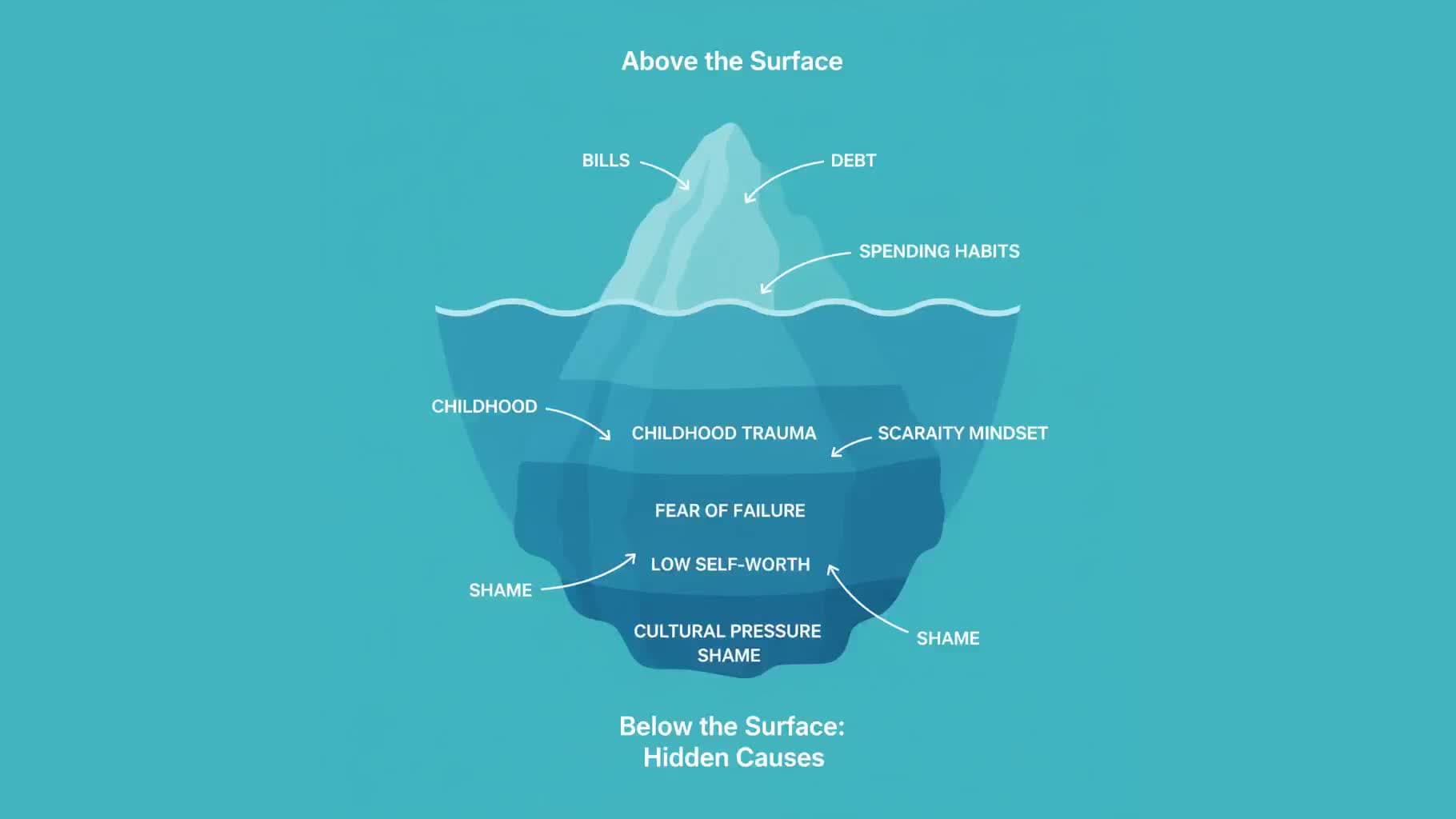
- The Financial Anxiety Iceberg: What You See vs. What's Really HappeningUnderstanding financial stress isn't just about looking at bank balances; it's about recognizing the hidden psychological forces beneath the surface. Like an iceberg, where only 10% is visible above water while 90% lurks below, financial anxiety reveals itself through obvious symptoms while its deepest causes remain hidden from view. We at PsyFi think that finding the root psychological causes of money stress is the key to achieving financial wellness.