

5 A/B Tests Marketers and Researchers Can Run to Measure Price Framing
Applied behavioural briefing for marketers and researchers. Get concise evidence, five test-ready A/B templates, PsyFi case notes, and FTC compliance...
How you frame a price can change which option a customer picks, often without changing the total paid. Partitioned pricing, differential price framing (“for $20 more”), and temporal framing (per day versus per year) reliably shift perceived expensiveness, choice share, and even risk preferences. The mechanisms are well understood; what follows is the evidence, the moderators, and how to apply each frame without triggering deceptive-pricing risk.
TL;DR:
Differential price framing increases preference for premium options by making incremental costs more salient, especially in fast, low-involvement purchases.
Surcharges and add-ons should be clearly linked to benefits to avoid backfiring when perceived as arbitrary or unjustified.
Showing subscription prices per month boosts perceived affordability but should be accompanied by full-term details to prevent manipulation perceptions.
Price comparisons based on percentages benefit lower-price items, while absolute dollar savings are more effective for higher-ticket products.
Price framing effects are strongest in rapid decisions and weaken when buyers take more time to compare totals or are more deliberate.
Table of Contents
What the framing effect in pricing actually means
The framing effect in pricing describes how identical costs produce different purchase decisions depending on how they’re presented, split into components, compared to a reference point, or expressed as a rate versus a lump sum. It’s related to but distinct from anchoring (which relies on a prior number setting expectations) and discount signalling (which relies on a comparison price to imply savings). Price framing changes the presentation of one true price; anchoring changes the reference point a buyer judges it against.
Common examples marketers already use:
Annual plans shown as “per month” to lower the number a shopper sees first
Add-ons pitched as “for $5 more” rather than folded into a new total
Fees separated from a base price so the advertised figure looks smaller
Each of these is the same total dressed differently, and the dressing changes behaviour.
The psychology behind why framing moves behaviour
Prospect theory, developed by Tversky and Kahneman, established that people evaluate outcomes as gains or losses relative to a reference point rather than in absolute terms, and that they are risk-averse for gains and risk-seeking for losses. That asymmetry is the root of most price-framing effects: a $10 fee framed as a loss feels worse than the same $10 folded into a slightly higher base price framed as a single gainless total.
Loss aversion, and the closely related endowment effect, mean people weigh losing something more heavily than gaining the equivalent, a pattern that extends well beyond simple monetary choices into how consumers react to information framed as gains versus losses. Reference points and mental accounts explain the rest: shoppers judge a price against whatever number they saw most recently (an anchor), and they file spending into topical buckets (“groceries,” “travel”) rather than one running total.
Framing strength isn’t constant. It moves with:
Product type: framing effects are stronger for experiential or emotionally loaded purchases than for pure commodities.
Deliberation: fast, low-involvement decisions are more frame-sensitive than slow, comparison-heavy ones.
Prior reference prices: a shopper who has just seen a higher number anchors differently than one seeing the offer cold.
One core finding to remember: prospect theory’s gain-loss asymmetry is the theoretical backbone behind nearly every applied price-framing tactic that follows.
A practical catalogue of price frames
Partitioned pricing. Splitting a base price from surcharges can redirect attention and lift demand, but the effect depends on whether the surcharge looks justified. Do label what each add-on buys; don’t leave a fee looking arbitrary.
Differential price framing. Framing an upgrade as “for $20 more” rather than as a new inclusive total increases choice share for the premium option. Do pair the incremental number with a concrete benefit; don’t bury it inside a bigger figure.
Temporal framing. Showing “per month” instead of the annual total makes a plan look more attainable, but overuse can read as manipulative once shoppers do the math themselves. Do disclose the full term nearby; don’t hide it in fine print.
Absolute versus percent savings. Percent framing tends to feel bigger on smaller base prices, absolute dollar framing tends to feel bigger on larger ones. Match the frame to the price tier rather than defaulting to one.
Visual and menu framing. Shorter price strings, fewer digits, and consistent currency symbols across a menu reduce perceived cost load, a small but reliable presentation effect.
What the key studies actually show
The empirical record on price framing is smaller and more specific than marketing folklore suggests, but it’s consistent where it exists.
Tversky and Kahneman’s original work on gain and loss framing remains the theoretical anchor for every applied study that followed.
Allard, Hardisty, and Griffin (2019) found that differential price framing raises choice share for higher-priced options compared with inclusive total pricing, an effect they tie to comparative focalism, making the incremental cost the salient number rather than the full price.
Harvard Business School research on partitioned pricing shows it can raise demand, but the direction flips when surcharges feel arbitrary rather than benefit-linked.
Boundary conditions matter: consumer deliberation reduces the differential price framing advantage, meaning the effect is strongest in fast, low-friction decisions and weakens as buyers slow down and compare totals.
Framing works best when a price difference is made focal and the decision is fast; slower, more deliberate comparisons erode much of the advantage.
Choosing and implementing a price frame without crossing a line
Match the frame to the product and the decision speed before touching a live price; understanding what is financial self-awareness and why it matters can help tailor the approach effectively.
Use differential framing for upgrades and add-ons where the incremental cost is small relative to the base.
Use partitioned pricing only when each surcharge maps to a named, visible benefit.
Use temporal framing for subscriptions, provided the full-term total sits nearby, not buried.
Default to percent savings on lower-ticket items and absolute dollar savings on higher-ticket ones.
Regulatory guardrails aren’t optional in the United States: the FTC’s rule on unfair or deceptive fees requires marketers to display the actual total payable price prominently and prohibits hidden mandatory fees, regardless of how attractive a partitioned frame looks in testing.
Before launch, confirm: audience segmentation is defined, the expected direction of the effect is written down in advance, an A/B plan with a primary metric is locked, and rollback criteria are set if refunds or complaints spike.
Pro Tip: Track choice share and refund rate side by side. A frame that lifts conversion but also lifts cancellations is usually solving the wrong problem.
Testing framing effects without fooling yourself
Run a simple two-arm A/B test (inclusive total versus partitioned or differential frame) before attempting a factorial design with multiple frames at once.
Prioritize conversion rate and revenue per visitor as primary metrics, and track refund or complaint rate as a guardrail metric, not an afterthought.
Use a rule-of-thumb power calculation before launch: underpowered tests on subtle framing differences routinely produce false positives.
Check for heterogeneity across segments, since a frame that works for new visitors can flop for repeat buyers with an existing reference price.
Treat lab findings as directional. Field results often shrink once real friction, distraction, and repeat exposure enter the picture, and short-term lifts don’t always hold up over longer purchase cycles.
How PsyFi applies behavioural framing in practice
PsyFi’s coaching engine leans on the same reference-point and loss-aversion logic covered above, translated into personal finance rather than checkout pages. The app links a user’s accounts, flags spending patterns against that person’s own reference points, and delivers real-time nudges rather than generic tips.
Personalized insights are framed around a user’s own historical spending, not a generic benchmark, which mirrors how reference-price effects work in pricing research.
Readers exploring the mechanics behind these nudges can see the underlying concept explained in loss aversion and anchoring bias.
The mental accounting piece breaks down why people treat a “vacation fund” differently from a “grocery budget,” a pattern that shows up constantly in framing research.
Where the research still falls short
The lab studies behind most framing advice are clean, controlled, and short. What’s missing is more field evidence over longer purchase cycles, where distraction, repeat exposure, and real budgets complicate the tidy gain-loss story. I’d treat any framing recommendation for a complex, high-involvement purchase as a hypothesis to test locally, not a rule to import wholesale. Readers with field data or replication attempts worth comparing notes on are welcome to reach out.
— Maanya
An adjacent option for running your own framing experiments
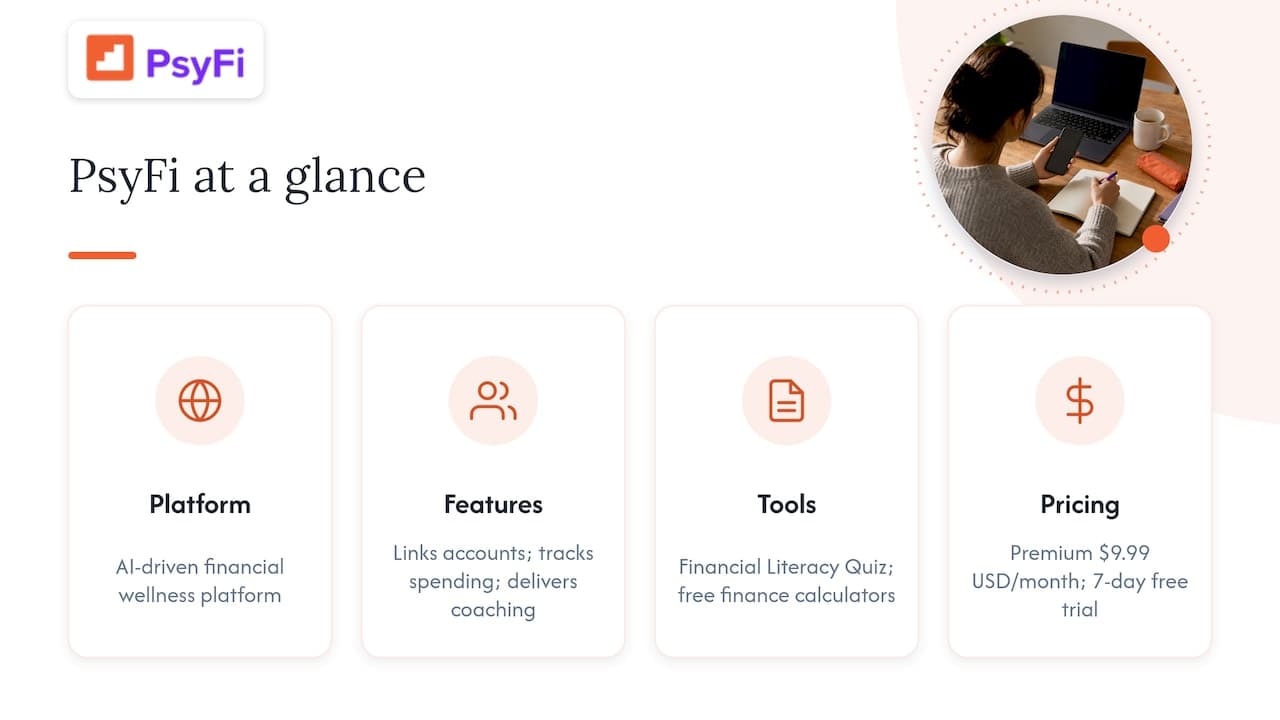
If you’re a marketer or researcher who wants to move past one-off A/B tests into ongoing personalized experimentation, PsyFi is an AI-driven financial wellness platform that links a user’s accounts, tracks spending behaviour, and delivers coaching based on that person’s own patterns rather than generic advice. It’s built for individual financial wellness, not checkout optimization, but the same reference-point and loss-framing principles covered above run through its design.
Readers who want to see the mechanics applied can try the Financial Literacy Quiz or the free finance calculators to model outcomes before drawing conclusions from a single test. PsyFi’s Premium Monthly plan runs $9.99 USD per month, with a 7-day free trial available on the landing page.
Sources
Allard, Hardisty & Griffin — Differential price framing increases premium choice (2019)
Loss aversion, the endowment effect, and gain-loss framing for information — PMC
FAQ
What are the 5 factors that affect price?
Price perception is shaped by the reference point a buyer holds (anchoring), how the price is split into parts (partitioning), the time frame it’s shown in (per period versus total), whether savings are shown as a percent or a dollar amount, and the buyer’s own deliberation speed. Each factor can shift perceived expensiveness without changing the actual total.
Can you give me an example of the framing effect?
A subscription shown as “per month” instead of the annual total is a classic price-framing example: the total is identical, but the smaller number feels more attainable. Differential framing, such as showing an upgrade as “for $20 more” rather than a new total, is another documented example that increases choice share for the premium option.
How to avoid the framing effect?
Compare the full total cost across options before deciding, rather than judging each offer on the number shown first. Slowing down and doing the math yourself is the most reliable way to counter a frame, since deliberation is known to reduce framing’s advantage.
What is Goffman’s framing theory?
Goffman’s framing theory, from sociology, describes how people interpret situations through mental frameworks that organize meaning and expectation. It’s a broader concept than the price-framing effect discussed here, which comes from behavioural economics and prospect theory rather than sociological frame analysis.
Recommended
This content is provided for general informational and educational purposes only and does not constitute financial, investment, tax, or legal advice. PsyFi provides financial coaching tools and behavioral insights, not regulated advisory services. Always consult with a qualified financial advisor or tax professional regarding your personal situation before making financial decisions.
Keep reading
- Applied Behavioral Economics in Personal Finance: How AI Micro-Interventions Reduce Intention-Action Gap FailuresMost budgeting tools assume rational actors. Early PsyFi beta data suggests psychology-first micro-interventions and daily AI check-ins close the intention-action gap better than end-of-month reviews.
- The Psychology of Debt: Why Getting Out Feels So Hard
- Loss Aversion Explained: Why Losing $100 Hurts More Than Gaining $100