
30.9% Never Return: Panic Selling Psychology, Evidence and AI Fixes
Discover why 30.9% of panic sellers never return, what peer‑reviewed data shows, and regulator‑backed steps plus AI tools to prevent selling at market lows.
Panic selling is the abrupt, large-scale liquidation of investments driven by fear rather than analysis, and for most investors it hurts more than it helps. The exception is a pre-specified stop-loss triggered during a genuinely fast-deteriorating market. For everyone else, the single most useful move is to replace impulse decisions with a pre-set plan or automated contribution schedule.
TL;DR:
The behavior is driven by loss and regret aversion, framing effects, and personality traits such as neuroticism, often triggered by volatility swings and personal liquidity shocks.
Clear triggers like sharp reversals, negative media, and unexpected expenses can prompt reactive selling, which can be mitigated through pre-planned, automated responses.
Strategies such as goal setting, dollar-cost averaging, cooling-off rules, and consulting professionals can help prevent impulsive decisions during crises.
Table of Contents
What panic selling is and how it differs from overtrading or the disposition effect
How the brain drives panic selling: perceived control, loss aversion, framing and personality
What the data says: frequency, timing and outcomes of panic selling
How AI and coaching can identify and reduce panic-selling risk
What panic selling is and how it differs from overtrading or the disposition effect
Researchers studying brokerage data generally define panic selling as a sudden, sharp reduction in risky-asset holdings, often during or immediately after a market decline. The MIT dataset on investor freak-outs uses this kind of threshold to flag accounts that abandon equities all at once rather than trimming gradually.
That is a distinct behaviour from two other patterns investors often confuse it with:
Overtrading means making frequent trades regardless of market direction, usually driven by overconfidence rather than fear.
Disposition effect means selling winning positions too early while holding losing positions too long, a pattern rooted in regret avoidance rather than crisis response.
Panic selling means a one-time, often irreversible exit from risk during a period of acute stress, regardless of whether the specific position is a winner or loser.
An investor who sells a profitable tech stock after a good quarter is showing the disposition effect. An investor who sells an entire portfolio, winners and losers alike, during a single volatile week is panic selling. The distinction matters because the fixes differ: disposition effect responds to tax and framing reminders, while panic selling responds to pre-commitment and automation.
How the brain drives panic selling: perceived control, loss aversion, framing and personality
Panic selling starts as a psychological switch, not a financial calculation. A Boston Fed working paper on the psychology of financial panic describes this as a shift from a “perceived-control” regime, where an investor feels they understand what is happening and can wait it out, to a “lack-of-control” regime, where the situation feels unpredictable and unbearable. Once that switch flips, selling becomes an attempt to regain a feeling of safety rather than a reasoned response to new information.
Several forces push that switch:
Loss aversion makes the pain of a falling portfolio feel sharper than the pleasure of an equivalent gain, so investors overweight the threat of further losses.
Regret aversion adds a second layer: investors fear the future regret of having done nothing more than they fear being wrong.
Framing effects amplify both. Headlines that describe a decline in dramatic terms, or a vivid anecdote about someone else’s losses, make the threat feel more immediate than the numbers justify.
Personality traits, particularly neuroticism, and cognitive patterns like overconfidence in one’s own timing ability raise susceptibility, a pattern confirmed in PLOS One research on panic selling, overconfidence and financial literacy.
The psychology of spending shows a similar pattern in everyday money decisions: emotional states, not facts, usually drive the moment of action.
Pro Tip: Name the feeling before you act on it. Writing down “I feel like I am losing control” slows the switch from perceived control to panic long enough to reconsider.
What the data says: frequency, timing and outcomes of panic selling
Panic selling is far rarer than the financial media narrative suggests, but it clusters tightly around crisis moments and the damage can be lasting. Using 653,455 brokerage accounts, the MIT freak-out study found that the overall base rate is about 0.1% of accounts in a given period, but that rate spikes up to three times higher during large market moves.
Nearly a third of investors who panic-sell never return to risky assets, according to the same MIT research, which puts the figure at 30.9%. That permanent exit is where most of the long-term cost sits, since investors who stay out miss the recovery entirely rather than just the decline.
Metric | Figure |
|---|---|
Base rate of panic selling (normal periods) | ≈0.1% |
Spike during large market declines | Up to 3× the base rate |
Investors who never return to risky assets | 30.9% |
Investors who reenter, doing so within 1 to 5 months | 58.5% |
ML model true positive accuracy | ≈69.5% |
ML model true negative accuracy | ≈81.2% |
All figures above come from the MIT freak-out study.
Panic selling can reduce losses in the narrow case of a rapidly deteriorating market where the decline reflects a genuine, lasting shift in fundamentals rather than a temporary shock. In most other cases, the cost comes from missing the recovery: of the investors who do return to the market, most do so within one to five months, often after the sharpest part of the rebound has already happened.
Who is most at risk: demographic and portfolio indicators
Certain patterns show up repeatedly in large-scale account data and are worth checking against your own situation.
Age and dependents: investors with financial dependents and those earlier in their investing experience show higher rates of reactive selling in downturns.
Self-reported risk tolerance: the FINRA Foundation’s investor survey found that under-35 investors’ willingness to take substantial portfolio risk fell sharply, from 24% in 2021 to 15% by 2024, a steeper drop than the overall investor population.
Portfolio composition: heavier use of options, margin, or a high share of daily trading activity correlates with more reactive, emotion-driven selling.
Behavioural history: frequent account checking, a past history of emotional trading decisions, and low diversification all raise vulnerability.
If two or more of these apply to you, the mitigations in the next sections carry more weight than they would for a buy-and-hold investor with a long horizon.
Triggers and market signals that precede panic selling
Panic selling rarely happens without a proximate spark. The research points to a short, recognizable list of triggers.
Volatility spikes and price reversals: sudden swings, especially a sharp reversal after a run-up, are the clearest empirical trigger for reactive selling, as detailed in research on freak-out behaviour and momentum reversals.
Negative media framing and social amplification: dramatic headlines and widely shared anecdotes about losses compress the time between seeing bad news and acting on it.
Personal liquidity shocks: a job loss, unexpected expense, or margin call forces a sale at the worst possible moment, regardless of the investor’s actual risk tolerance.
Recognizing which of these applies in the moment, market noise versus personal necessity, changes what the right response looks like.
Practical, regulator-backed steps to avoid panic selling
The Investor is blunt about the fix: plan it, rather than react to it. The specific steps below translate that principle into practice.
Set goals with timeframes: write down what each investment is for and when you will need the money, so a decline in year two of a ten-year goal has obvious context.
Automate contributions and rebalancing: a dollar-cost averaging schedule removes the daily decision of whether to buy or sell, which is also where most panic decisions originate.
Build an emergency fund: cash reserves separate from your investment accounts mean a personal liquidity shock never forces a sale at a bad price.
Use cooling-off rules: a mandatory 24 to 48 hour wait before any discretionary sell order gives the perceived-control response time to return.
Set trading windows: limiting when you can place discretionary trades, say, once a week instead of in real time, reduces the number of moments where panic can act.
Use an accountability partner or registered professional: a second person asking “what changed about the fundamentals?” interrupts the emotional loop.
Pro Tip: If you want a stop-loss, write the exact trigger price and the exact action in advance, on paper, before the market moves. A stop-loss decided in the moment is panic selling with a different name.
A structured stop-loss is acceptable when it is codified ahead of time, tied to a specific, predefined condition, and applied consistently rather than adjusted downward every time the market drops further.
How AI and coaching can identify and reduce panic-selling risk
Machine learning models built on brokerage data can flag elevated panic risk before it happens. The MIT research on predictive features found that recent volatility measures, portfolio history, and trading frequency are the strongest predictors, with models reaching roughly 69.5% true positive and 81.2% true negative accuracy in identifying accounts at risk.
That level of accuracy is useful, not perfect, which is why prediction works best paired with a human-centred nudge rather than an automated override.
Real-time coaching that reacts to actual account behaviour, not generic market commentary, catches the moment before a decision rather than after.
Account linking lets a system see the full picture, cash buffers, other holdings, recent behaviour, instead of reacting to one account in isolation.
Pre-commitment nudges delivered at the right moment turn a vague intention to “stay calm” into a specific action, like the cooling-off rule above.
Pro Tip: A system that already knows your spending and saving patterns can flag an unusual, fear-driven trade request before you submit it, which is a more reliable backstop than willpower alone.
We built Psyfiapp around this exact gap between intention and action, using behavioural data rather than generic market advice to personalize the nudge.
A practical habit to build financial calm
If there is one habit worth starting this week, it is pairing a 24-hour cooling-off rule with an automated contribution schedule. The cooling-off rule catches the emotional spike, and the automation means your portfolio keeps moving in the right direction even while you wait it out.

Panic is not irrational. It is an adaptive signal that served us well against physical threats, and the Boston Fed’s psychological framework describes it as a predictable switch from feeling in control to feeling like you have lost it. The problem is that the same signal, applied to a diversified long-term portfolio, usually points the wrong way.
When a decision feels too large or too emotional to trust your own judgment, a registered financial professional is a better backstop than any rule you write for yourself. There is no shame in asking for a second opinion before a decision you cannot undo.
— Maanya
A behavioural approach to staying invested
We built our platform around the gap between knowing what to do and actually doing it under stress. Our AI engine links your accounts, learns your actual financial patterns, and delivers real-time coaching that flags the kind of reactive decision this article describes, before you make it rather than after.
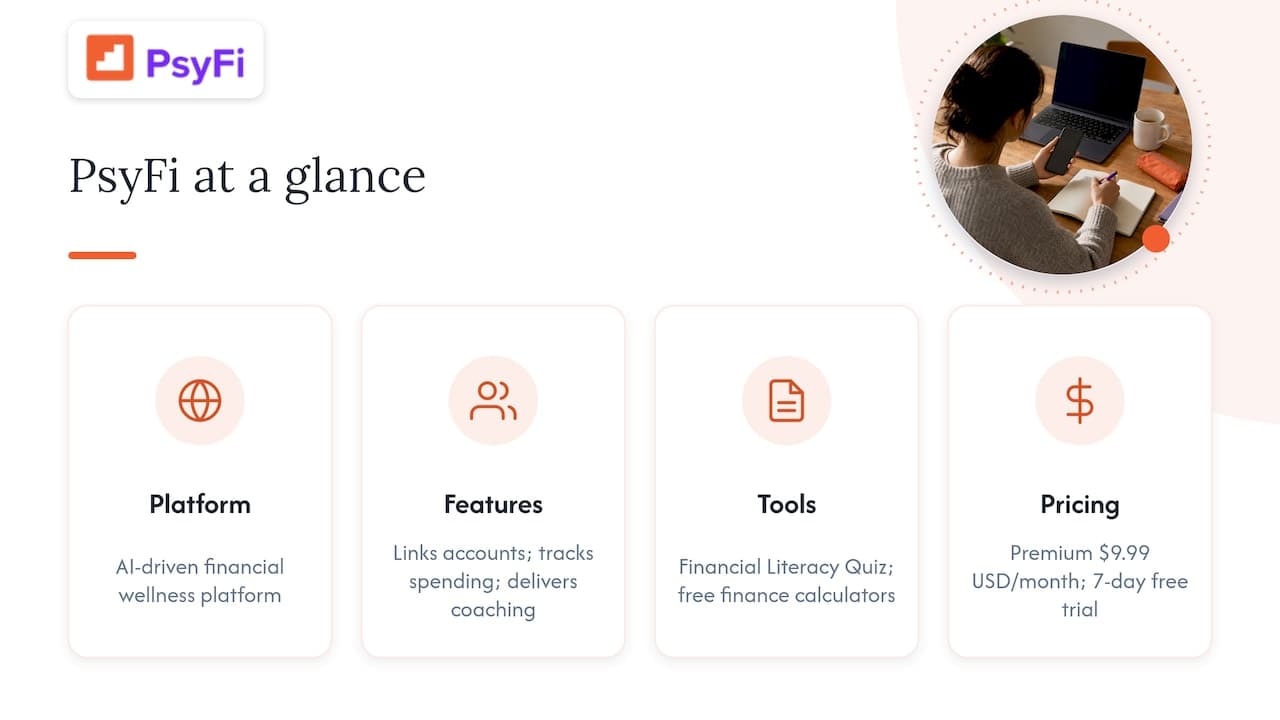
That means the automation, the cooling-off prompts, and the goal-tracking we covered above do not depend on your willpower on a bad day. Premium Monthly is $9.99 USD per month after a 7-day free trial, or $69.99 USD per year on the annual plan, and either one gives you a personalized plan built from your own behaviour rather than a generic market script. Start the free trial to see what your own panic-risk pattern looks like.
This article is general information, not a substitute for advice from a qualified financial advisor. Consult a qualified financial professional about your own circumstances before acting on anything here.
FAQ
What is panic selling in investing?
Panic selling is the sudden, large-scale sale of investments driven by fear during a market decline rather than by a change in underlying fundamentals. It differs from routine portfolio rebalancing because it is reactive, often irreversible, and tends to happen all at once rather than gradually.
How common is panic selling among investors?
Panic selling is rare in normal markets, around 0.1% of brokerage accounts in a given period, but that rate spikes up to three times higher during sharp market declines, according to the MIT freak-out study. Nearly a third of investors who panic-sell never return to risky assets at all.
What triggers panic selling the most?
Sharp volatility spikes and price reversals are the clearest market-level triggers, often amplified by dramatic media framing and social sharing of losses. Personal liquidity shocks, like a margin call or unexpected expense, can force a sale regardless of market conditions.
How can I avoid panic selling during a market crash?
Regulatory guidance from Investor.gov recommends setting goals in advance, using dollar-cost averaging, and diversifying so a single decline does not threaten your whole plan. Pairing that with a 24-hour cooling-off rule before any discretionary sell order gives the emotional response time to pass.
Does financial literacy reduce panic selling?
Higher financial literacy is associated with lower rates of panic selling, while overconfidence can increase it even among investors who understand the markets well, according to PLOS One research. The two traits can work against each other in the same person, which is why self-awareness matters as much as knowledge.
Sources
Recommended
This content is provided for general informational and educational purposes only and does not constitute financial, investment, tax, or legal advice. PsyFi provides financial coaching tools and behavioral insights, not regulated advisory services. Always consult with a qualified financial advisor or tax professional regarding your personal situation before making financial decisions.
Keep reading
- 3 Research Backed Ways to Stop Keeping Up With the Joneses in DaysUse three research backed, mental health first practices: self compassion, social savoring, and simple micro habits to cut comparison driven spending and...
- Impulse Buying Brain Science: 3 Moves to Resist the UrgeLearn the neuroscience behind impulse buys and three science-backed moves—pause, add friction, and make total cost visible—to stop impulsive spending and...