


Open Banking in the USA: What It Is and How to Connect Safely
Open banking in the USA lets you share bank data with apps you choose. Learn how it works, what rules apply, and how to stay in control of every connection.
By Maanya Nagpal, Co-Founder of PsyFi
Open banking in the USA is a way to let a financial app see your bank data with your permission, so the app can help you budget, save or pay. You stay in charge: you choose which apps get access, and you can take that access back. In the U.S., it mostly works today through industry practice, while the federal rule meant to standardize it is being reconsidered.
If you feel unsure about linking your accounts, that is a normal reaction. This guide explains the process in plain words, so you can decide what feels right for you. It is general education, not legal or financial advice.
TL;DR
Open banking lets you share data like balances and transactions with apps you approve, usually through a go-between called a data aggregator.
A 2024 federal rule on this was issued, but it has been challenged and is being reconsidered, so U.S. open banking still runs largely on industry practice.
Connections that use an API (a secure data channel) avoid sharing your bank password with each app. Older screen scraping stores your login.
You can limit risk by checking what an app asks for, using the access settings in your bank, and revoking connections you no longer use.
PsyFi works in the US and Canada, connects through Plaid or document upload, and needs no bank login if you upload documents. PsyFi is not a licensed financial advisor.
Table of Contents
What open banking means in the U.S.
The Federal Reserve Bank of Kansas City describes open banking as a model where you share account data, such as balances and transaction history, with outside providers like other banks or fintech apps through APIs. An API is a secure, set-up channel that lets two computer systems talk to each other.
The Congressional Research Service gives a simple example: a budgeting app that shows checking, investment and credit card balances in one place. That is open banking at work.
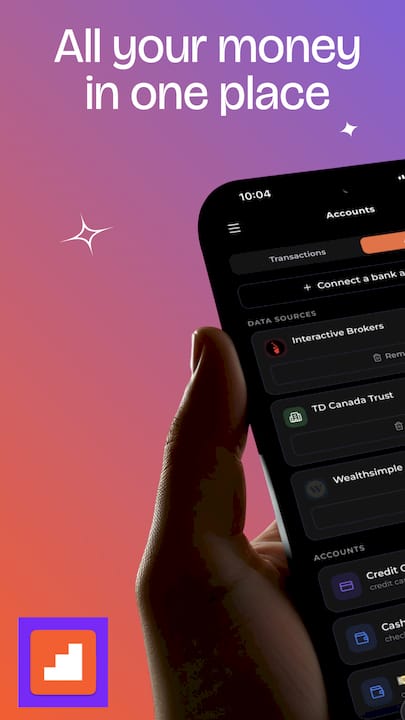
In short, your data is yours to point where you want. The app does not get it by magic. You say yes first.
How the connection works, step by step
Most U.S. connections use a middle company called a data aggregator. The Kansas City Fed lays out the flow and names Finicity, MX and Plaid as examples of newer API aggregators.
Step | What happens | What you see |
|---|---|---|
1 | You approve an app to use your data | A consent screen |
2 | The app asks the aggregator for your data | Nothing, it runs in the background |
3 | The aggregator pulls data from your bank through another API | You may log in at your bank |
4 | The aggregator sends the data to the app | Your balances and transactions appear |
The app then uses that data to deliver its service, like a budget or a spending summary.
What data can be shared, and who controls it
The Consumer Financial Protection Bureau (CFPB) is the federal agency that oversees consumer finance. In October 2024 it issued a final rule on personal financial data rights under Section 1033 of the Dodd-Frank Act. The rule was built around a few ideas:
Topic | What the 2024 rule says |
|---|---|
What is covered | Data such as transactions, costs, charges and usage information, per the final rule text |
Who gets access | Third parties that give a disclosure, limit use to what is reasonably necessary, and get your express consent |
How long it lasts | Up to one year unless you renew |
If you revoke | The app stops collecting, and stops using or keeping earlier data unless needed for your requested service |
A Georgetown University policy paper adds that under the rule, third parties could not sell the data or use it for targeted ads or cross-selling.
Where the rules stand today
This part moves, so here is the timeline.
October 2024: the CFPB issued the rule. Its compliance dates were staged from April 1, 2026 to April 1, 2030, depending on the size of the data provider, according to the final rule notice.
2025: bank trade groups sued. The Kansas City Fed’s August 2026 briefing reports the rule was challenged, a stay was granted in July 2025, and an advance notice on reconsideration followed in August 2025.
August 2026: the CFPB’s Regulatory Agenda listed a planned rulemaking to reconsider parts of the rule.
States: the same briefing says New York lawmakers proposed the first two state open banking bills in March 2026.
What this means for you: do not assume every protection in the 2024 rule applies today. Check an app’s own consent screen and privacy terms. The Congressional Research Service notes that how much open banking should be market-driven versus regulation-led is still debated. For legal questions about your own situation, talk with a licensed attorney.
API access vs. screen scraping
There are two ways apps have reached your data. PNC’s open banking page explains both.
API access | Screen scraping | |
|---|---|---|
Your bank login | Not handed to each app | Stored by the app or aggregator |
Control | Review, update and revoke in your bank’s digital banking | Often harder to see and manage |
Direction of the industry | Growing | Being phased out |
The Bank Policy Institute, a banking industry group, says the industry is moving from screen scraping toward APIs. The CFPB’s 2024 rule also barred screen scraping as a way for banks to meet its requirements.
What open banking can do for your money habits
The Kansas City Fed lists benefits like pay-by-bank payments, instant bill pay and cash-flow-based credit decisions. For everyday budgeting, the big gain is simple: your accounts show up in one place without typing in every purchase.
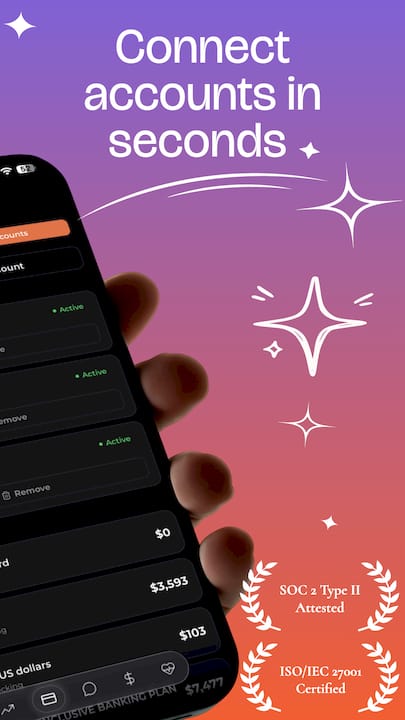
That can feel scary if you tend to avoid looking at your accounts. Seeing it all at once is not a judgment. It is just information. Many people find that a clear picture is a calmer starting point than guessing.
If you want a quick first step with no linking at all, try a free savings goal calculator.
Risks to understand before you connect
The Kansas City Fed’s data aggregator briefing notes that APIs let you share data without giving your credentials to every app, and that banks act as gatekeepers on the type and amount of data shared. It also flags three things for you to know:
A breach at an aggregator could lead to account takeover fraud.
Deleting an app does not always cancel its permission.
Disclosures may not clearly say who can see your data or how to revoke access.
A simple pre-connection checklist
Check | Why it helps |
|---|---|
What data does the app ask for? | You can say no to more than you need |
Does it use an API or ask for your bank login? | API access avoids sharing your password with the app |
Where do you manage access? | Know the settings page before you need it |
Is the app’s security independently audited? | Audits like SOC 2 Type 2 are one signal |
Do you have other connections you forgot? | Remove the ones you no longer use |
To go deeper on one popular aggregator, read our guide on what Plaid sees and how to stay in control. If you prefer no bank sync at all, see these budgeting apps without bank sync.
How to take back access
Open your bank’s app or website and look for a section on connected apps or data sharing.
Review each connection and remove ones you do not use.
Do this in the app too, since deleting an app may not end the permission.
Set a reminder to review connections once or twice a year.
If you see activity you do not recognize, contact your bank right away.
Where PsyFi fits
PsyFi is an AI financial wellness app that looks at your real financial behavior to find the patterns behind it, like stress spending or avoiding your accounts, and then builds a personalized saving and spending plan. It works in the US and Canada. You can connect through Plaid or upload documents, so no bank login is needed. PsyFi holds ISO 27001 certification and a SOC 2 Type 2 audit, and you can read the details on the security page. You can see the features and pricing: Premium is $9.99 per month or $69.99 per year, after a 7-day free trial. PsyFi offers coaching, not financial advice, and it is for individuals only.
Our view on open banking
Open banking is a tool, and what matters is what you do with the picture it gives you. Most budgeting apps show what you spent. We think the harder and more useful question is why: why the late-night orders after a rough day, or why you skip opening your balance.
That is why we built PsyFi around your own data and behavioral science. Our approach is designed to spot those patterns and coach you in the moment, without shame. Connecting an account should be your choice, with clear controls, and we offer document upload for people who prefer it.
Maanya Nagpal
FAQ
Is open banking available in the USA?
Yes, in practice. Apps connect to banks through data aggregators today, though the federal rule that would standardize it is under reconsideration. Coverage and features vary by bank and app.
Is open banking safe?
API-based connections let you share data without giving your bank password to every app, according to the Kansas City Fed. Risks remain, like aggregator breaches, so review permissions and remove old connections.
How do I stop an app from seeing my bank data?
Revoke access in your bank’s connected-apps settings, and in the app itself. Deleting the app alone may not end the permission.
Does PsyFi need my bank login?
No. PsyFi connects through Plaid or lets you upload documents, so no bank login is required. It works in the US and Canada.
Ready to see why you spend the way you do?
If linking accounts has felt overwhelming, you can start at your own pace. Start your 7-day free trial.
Sources
Open Banking: A Critical Piece in the Future of Financial Services, Kansas City Fed
Access to Consumer Financial Data, Congressional Research Service
Data Aggregators: The Connective Tissue for Open Banking, Kansas City Fed
Open Banking: Lessons, Challenges, and Opportunities, Georgetown
Recommended
This content is provided for general informational and educational purposes only and does not constitute financial, investment, tax, or legal advice. PsyFi provides financial coaching tools and behavioral insights, not regulated advisory services. Always consult with a qualified financial advisor or tax professional regarding your personal situation before making financial decisions.
Keep reading
- Is Bank Account Linking Safe? What Apps See and How to Control ItLinking a bank account to a budgeting app can be done safely. Learn what apps can see, how secure links work, and how to cut off access any time.
- Copilot Money Alternatives: Find an App That Changes Your HabitsLooking for Copilot Money alternatives? Compare Monarch, YNAB, PocketGuard, Rocket Money and PsyFi on price, setup, privacy and habit coaching.

- Best Money Habit Apps: How to Pick One That Changes Your Habits